

Running in Dream Meaning: The Ultimate Psychological, Neurological, and Archetypal Guide to Somatic Escapism, Ambition, and Fight-or-Flight Processing
You wake up with your heart hammering violently against your ribs, your calves twitching with a residual, phantom ache, and your bedsheets twisted tightly around your limbs. For what felt like hours in the theater of your unconscious mind, you were in motion. Perhaps your feet felt like blocks of solid lead, rooted to the ground while an unseen, terrifying predator closed the distance behind you. Perhaps you were sprinting effortlessly across a vast, neon-lit skyline, chasing a fleeting figure or a distant beacon of light. Or maybe you were running completely naked through a crowded public space, desperately looking for an exit.
If you are trying to decode the true running in dream meaning, you have arrived at one of the most critical structural junctions in modern psychoanalysis. You have emerged from a full-body somatic simulation. As your nervous system transitions out of sleep paralysis and back into waking reality, you are likely asking yourself a series of urgent, foundational questions: What am I desperately trying to escape in my waking life? Is this dream a warning that I am burning out from a relentless corporate hustle, or is it proof that my survival instincts are sharper than ever? Why couldn’t I move my legs when I needed to sprint?
Let’s establish the primary clinical principle used by professional dream practitioners globally: A dream about running is a high-priority neurological and emotional mapping sequence that reflects your current relationship with control, vulnerability, and lifestyle momentum. Because running requires the perfect coordination of physical power, trajectory tracking, and energy expenditure, your subconscious uses this specific action to map exactly how you are handling pressure, chasing your ambitions, or running away from painful truths in your daily life.
For high-performing executives, venture-backed founders, tech innovators, and driven creators pushing the boundaries of success across America’s most intense economic engines—whether you are scaling enterprise software platforms in Silicon Valley and San Francisco, closing high-value financial mergers in New York City, managing massive real estate expansions in Texas, or navigating the high-stakes, high-visibility corporate and social climates of Miami, Los Angeles, and Washington, D.C.—your waking existence is defined by constant, rapid motion. You are continually running to hit quarterly revenue metrics, running to beat competitors to market, and running to maintain a flawless public brand. At night, your brain takes this relentless daily momentum and forces you onto an internal track to see whether your pace is moving you toward true fulfillment, or driving you off a cliff into total system burnout.
This definitive, long-form masterwork for healthydreamz.com delivers an exhaustive exploration of what it means when you dream about running. We will break down the neurobiology of REM sleep motor suppression, unpack Jungian shadow integration, analyze highly specific contextual dream scripts, decode regional stress profiles across major US markets, and provide an actionable, real-world integration blueprint to optimize your sleep architecture and claim your personal peace.
1. The Architectural Mechanics of Kinetic Integration: Running in dream meaning
To fully transform a chaotic running nightmare into a powerful optimization tool for your waking life, you must understand the underlying biological machinery and psychoanalytic forces that govern movement inside your sleep cycle.
+-------------------------------------------------------------+
|                 THE KINETIC PROCESSING CIRCUIT              |
+-------------------------------------------------------------+
| 1. WAKING LIFE INDUCTION:                                   |
|    - High-velocity environments, intense professional dead-  |
|      lines, unresolved trauma, or high-stakes ambitions.     |
|                                                             |
| 2. REM NEUROLOGICAL REGULATION:                             |
|    - Motor Cortex sends intense "Sprint" commands.           |
|    - Glycine and GABA block motor neurons (Somatic Paralysis)|
|    - Result: The "running through wet cement" dream dynamic. |
|                                                             |
| 3. ARCHETYPAL CODES:                                        |
|    - Running From: The Shadow Self demanding integration.     |
|    - Running Toward: The Ego chasing idealized inflation.   |
|                                                             |
| 4. THE SLEEP ENGINE OUTPUT:                                 |
|    - A vivid, full-body simulation mapping your psychological|
|      capacity to face threats or sustain your life pace.     |
+-------------------------------------------------------------+
The Neurobiology of Somatic Paralysis in REM Sleep
To understand the strange, frustrating sensations that often accompany a running dream—such as the feeling that you are moving through wet cement, heavy molasses, or that your legs are completely paralyzed—we must look directly at your brain’s sleep architecture.
Vivid, high-stakes running dreams occur almost exclusively during the Rapid Eye Movement (REM) stage of sleep. During a healthy REM cycle, your motor cortex (the brain region responsible for planning and executing physical movement) fires at a level of intensity that perfectly matches your waking life. If you are sprinting away from a monster in your dream, your motor cortex is sending massive, rapid electrical commands down your spinal cord, telling your legs to run as fast as possible.
However, to prevent you from physically leaping out of bed, acting out your dreams, and hurting yourself, your brainstem deploys a brilliant evolutionary safety mechanism known as REM atonia.
Two powerful neurotransmitters—glycine and GABA—are released into your nervous system, completely shutting down your motor neurons and putting your physical muscles into a temporary state of safe paralysis.
When your dreaming mind senses this real-world, physical immobility while your motor cortex is screaming at you to run, an intense sensory conflict occurs. Your subconscious mind tries to interpret why your legs aren’t responding to its commands, and it translates that somatic paralysis into a narrative script: you are running through wet cement, your legs are stuck to the floor, or you are moving in slow motion while danger approaches.
The Neurological Baseline: The classic “paralyzed running” dream is not a sign of emotional weakness or spiritual failure; it is a direct, literal translation of your brain working exactly as it should to keep your physical body safe in bed while your emotional center processes stress.
The Jungian Archetypal Battle: Chasing the Ego vs. Fleeing the Shadow
In Carl Jung’s master frameworks, being in a state of rapid flight or pursuit inside a dream points to an intense imbalance between your conscious Ego and the hidden layers of your Unconscious Mind.
- The Archetype of the Pursuer (Running From): When you are running away from an entity in a dream—whether it is a faceless man, a monstrous beast, a dark shadow, or a natural disaster—you are rarely running from an outside threat. You are running from your own Shadow Self. The Shadow contains the parts of your personality, desires, memories, and emotions (like intense rage, grief, unexpressed ambition, or trauma) that you have deemed unacceptable and have tried to lock away. The harder you try to ignore these feelings during the day, the more aggressive, powerful, and terrifying the pursuer becomes at night.
- The Archetype of the Destination (Running Toward): When you are running toward an object, a person, a glowing light, or a specific location, your dream maps your conscious Ego Ambition. It showcases your drive to achieve a goal, secure a position, or find safety.
From a Jungian perspective, the act of running is a clear sign of Psychological Fragmentation. You are separating yourself from a core part of your own identity. If you are running away, you are refusing to look at your shadow. If you are running toward something with toxic desperation, you are obsessively chasing an idealized version of success that may be pulling you completely out of alignment with your true soul.
2. The 5 Core Waking-Life Triggers Behind Running Dreams
When this kinetic script runs during your sleep cycle, your deeper mind is reacting to highly specific situational pressures, relational conflicts, and emotional patterns in your daily life. Clinical dream researchers trace running dreams to five primary triggers:
Trigger A: Active Avoidance of a Looming Life Confrontation
The most common real-world trigger for a running dream is the classic Avoidance Loop. There is an issue in your waking life that requires immediate, direct confrontation, but the mere thought of dealing with it triggers deep anxiety.
This could be a difficult conversation you need to have with your romantic partner about the future of your relationship, an escalating conflict with a business partner, or the realization that you need to fire a toxic employee. If you spend your day putting off this confrontation by distracting yourself with work, social media, or busywork, your subconscious mind refuses to let the issue drop. At night, it visualizes your emotional avoidance as a literal, terrifying sprint away from a threat.
Trigger B: Operating at an Unsustainable Creative or Corporate Pace
If you live in a constant state of hyper-productivity, running from meeting to meeting, answering endless emails, and managing multiple high-stakes projects simultaneously, your nervous system becomes locked into a state of chronic sympathetic dominance (the fight-or-flight response).
When your physical body finally stops moving and hits the mattress at night, your brain does not instantly drop into a peaceful state. It remains wound up, processing the frantic pace of your waking hours. The dream of running without rest is your subconscious mind’s way of holding up a mirror to your lifestyle, warning you: You are running yourself into the ground during the day, and your mind is continuing the marathon at night.
Trigger C: Impending Deadlines and Acute Performance Anxiety
For professionals who operate in environments with clear, unyielding deadlines—such as software engineers facing a major platform launch, lawyers preparing for a trial, or founders trying to close a venture capital round before funds dry up—time can feel like a predatory animal chasing you down.
If you are constantly worried that you will run out of time, fail to deliver, or let your team down, your mind translates this abstract pressure into a vivid physical chase. The closeness of the pursuer in your dream matches how close you are to your real-world deadline, reflecting your acute anxiety about your performance.
Trigger D: Deep-Seated Imposter Syndrome and the Fear of Exposure
If you have recently stepped into a major leadership role, closed a massive client contract, or achieved a level of public visibility that you don’t fully believe you deserve, you are likely battling Imposter Syndrome.
Deep down, you are terrified that you will be exposed as a fraud, that people will see through your professional facade, and that your success will vanish. This deep anxiety triggers a classic “flight” dream script, where you are running through public spaces trying to find a hiding place. The dream reflects your desperate desire to escape the pressure of public scrutiny and return to a safe, predictable space where no one is evaluating your performance.
Trigger E: The Awakening of Your Unexpressed Personal Ambitions
Not all running dreams are nightmares fueled by panic; many involve an empowering sense of speed, clarity, and determination. If you dream that you are sprinting cleanly toward a finish line, racing an opponent, or running toward a beautiful horizon, you are experiencing the awakening of your inner drive.
This trigger occurs when you have finally committed to a major goal, a lifestyle upgrade, or a creative project. Your subconscious mind is completely aligned with your waking intentions, providing you with a high-energy mental rehearsal to boost your confidence, sharpen your focus, and prepare your brain to conquer obstacles in the real world.
3. Contextual Decoding: Analyzing Specific Kinetic Dream Scripts
To unlock the precise wisdom your subconscious mind is trying to deliver, you must look past the general concept of movement and carefully examine the exact environment, your physical speed, and the outcome of your run.
+-------------------------------------------------------------+
|                 THE KINETIC CONTEXTUAL MATRIX               |
+-------------------------------------------------------------+
| THE SCENARIO:          | SUBCONSCIOUS TRUTH:                 |
|────────────────────────┼─────────────────────────────────────|
| Running away from an   | You are avoiding a part of your own |
| unknown monster/shadow | shadow self; a deep truth needs face|
|────────────────────────┼─────────────────────────────────────|
| Running through heavy  | Severe emotional burnout; your tools|
| wet cement or mud      | are mismatched for your life stress.|
|────────────────────────┼─────────────────────────────────────|
| Running completely     | Fear of exposure; acute vulnerability|
| naked in a public space| regarding your status or reputation.|
+-------------------------------------------------------------+
Scenario A: Running Away from an Unknown Monster, Shadow, or Faceless Pursuer
If your dream features you sprinting down dark alleyways, through endless corridors, or across a desolate forest, desperately trying to escape a terrifying monster or a faceless shadow whose form you cannot clearly see, you are dealing with unintegrated psychological material.
The faceless quality of the pursuer is highly significant. Because you refuse to turn around and look at the threat, you cannot see what it actually is. In waking life, this indicates that you are running from an internal emotion or an old trauma—such as a deep fear of failure, unresolved grief over a loss, or buried anger—rather than an outside person.
The Rule of the Turn: The moment you stop running in the dream, plant your feet, turn around, and look directly at the monster, the entity will almost always freeze, shrink, or transform into something manageable. Your subconscious is trying to force you to stop fleeing and start integrating your fears.
Scenario B: Running Through Heavy Wet Cement, Deep Mud, or Quicksand
Waking up exhausted after a dream where you are trying to flee a danger but find yourself moving in agonizing slow motion—your feet sinking deep into heavy wet cement, thick mud, or suffocating quicksand—points directly to a somatic burnout and coping crisis.
This visual highlights a waking situation where your conscious strategies are completely failing to handle your emotional realities. You are trying to push forward in your career or maintain a toxic relationship through sheer willpower, but your inner soul is refusing to cooperate. The mud represents the heavy emotional weight, burnout, and mental exhaustion that you are trying to ignore. Your deeper mind is using this slow-motion simulation to tell you the cold truth: You cannot outrun your problems with more hard work; you must stop, rest, and completely change your strategy. Dreaming of being pregnant.
Scenario C: Running Completely Naked Through a Public Space
If you are running down a busy street, through a corporate office, or across a crowded airport terminal, and you suddenly look down to find that you are completely naked, your mind is processing reputational vulnerability and exposure anxiety.
Clothing is our social armor; it hides our flaws and allows us to project a curated image of professionalism, wealth, and competence to the world. Running naked signifies that you feel deeply exposed, unprotected, and judged in your waking life. This dream frequently targets high-achieving individuals who have recently taken on massive public responsibilities. It reflects a deep fear that your peers will see your human flaws, look past your credentials, and discover your inner doubts.
Scenario D: Running in Place or Sinking into the Floor on a Treadmill
If your dream places you on a treadmill that is moving dangerously fast, or features you running with immense effort but looking at your surroundings to realize you haven’t moved an inch, you are witnessing an acute stagnation alert.
This script mirrors a waking life dynamic where you are expending a massive amount of energy, working eighty-hour weeks, and answering endless calls, but deep down, you realize you are not making any real progress toward your true soul goals. You are stuck in an automated hamster wheel of daily survival. Your subconscious is using this repetitive simulation to warn you that your frantic movement is an illusion; you are exhausting your health and your spirit to maintain a routine that isn’t taking you anywhere meaningful.
Scenario E: Running Effortlessly, Gaining Speed, or Winning a Race
If you are running cleanly through an open field, along a beautiful beach, or down a clear path, feeling a sense of weightlessness, exhilaration, and absolute control as you outpace your competitors or reach your destination, you are experiencing kinetic empowerment.
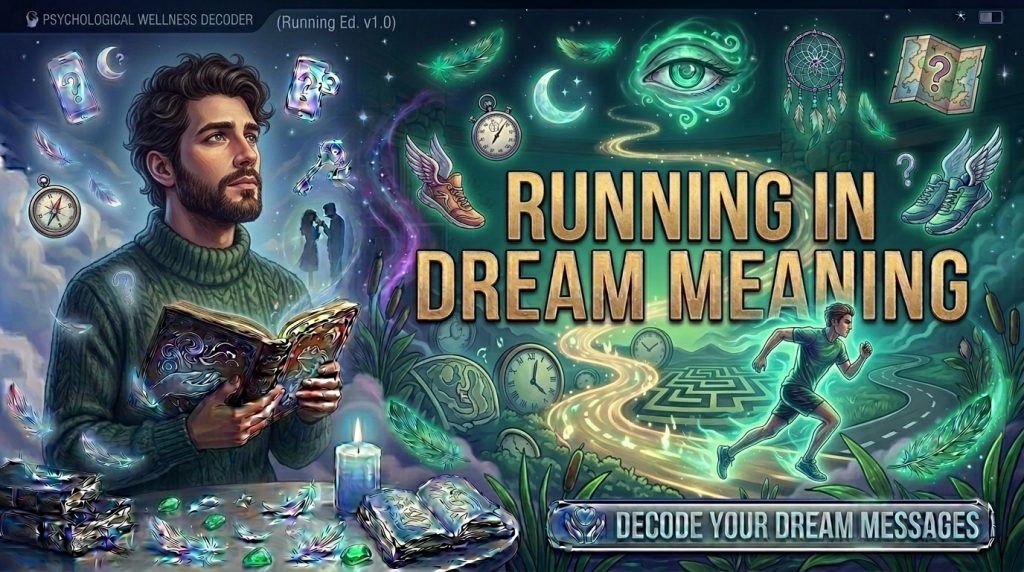
As shown in the image above, running with absolute power and clarity points directly to optimized alignment between your conscious goals and your unconscious power. It demonstrates that you have broken through your old self-doubt, cleared your internal blockages, and are moving forward in your career or personal development with authentic momentum. Your mind is confirming that you possess the raw stamina and strategy required to hit your targets and claim your wins.
4. Geographic Stress Profiles: How Local American Environments Shape Flight and Pursuit Dreams
The distinct corporate cultures, lifestyle speeds, and social expectations of the major United States metropolitan areas where we build our lives deeply influence the survival scripts that play out during our sleep cycles.
New York City: The Non-Stop Chase of Financial Survival
New York City operates on an incredibly intense wave of financial target tracking, real estate negotiation, and hyper-competitive career climbing. To maintain your position in Manhattan’s financial or corporate elite, you are forced to move at a relentless pace from the moment you wake up.
- The Psychological Toll: This constant hustle keeps your nervous system trapped in a loop of high adrenaline, where any delay feels like a failure.
- The Dream Impact: If you are a New York professional dreaming of running away from a threat, your subconscious is analyzing your survival burnout. It shows that while you are highly capable of managing intense pressure, you are treating your entire career as an endless, high-stakes chase, which prevents you from ever accessing a state of deep emotional grounding.
San Francisco & Silicon Valley: Outrunning Technological Obsolescence
The culture of San Francisco and Silicon Valley places an absolute premium on disruptive innovation, venture-backed scaling, and hyper-optimization. Founders and tech executives are under relentless pressure to ship products faster than their competitors and hit unrealistic growth metrics before their funding runs dry.
- The Psychological Toll: In this environment, time is treated as a scarce resource, and there is a constant fear of falling behind or becoming irrelevant.
- The Dream Impact: When a running dream runs in a Bay Area sleep cycle, it represents a fear of obsolescence. The thing chasing you down is your fear of missing the next tech wave, or failing to live up to the standard of your peers. The dream is a direct warning that your mind is treating your career like a race against time, and you need to build spaces where your value isn’t tied entirely to your speed of output.
Texas (Austin, Dallas, Houston): Outrunning the Standard of Perfection
Texas metropolitan hubs are currently defined by rapid business relocation, massive industrial growth, and a powerful cultural expectation to project an image of absolute success—the thriving business, the expansive home, and a flawless public reputation in local networks. Dream about fire in your house.
- The Psychological Toll: When immense energy is spent ensuring that your lifestyle looks perfect to your community, you naturally suppress your inner worries, financial strains, and career doubts.
- The Dream Impact: A dream of running through public spaces trying to find a hiding place in a Texas sleep cycle represents your mind’s attempt to escape the pressure of curation. The dream is an authentic call from your deeper self to stop running to maintain an artificial standard of perfection, and instead build connections based on real truth and vulnerability.
Miami & Southern Florida: Outrunning the Social Comparison Matrix
Miami operates on a high-visibility social frequency centered around luxury presentation, physical aesthetics, material wealth, and a fast-moving lifestyle scene where your outward appearance carries massive social currency.
- The Psychological Toll: Living in this continuous, high-comparison environment naturally triggers your primitive survival responses, as your mind spends immense energy managing your social status.
- The Dream Impact: A dream of running frantically away from a crowd or a threat in a Miami sleep cycle represents an urgent need for sensory down-regulation. The fire or the entity chasing you represents the burning exhaustion of keeping up appearances, while your run is a subconscious call to pull back from the public spotlight, disconnect from social comparison, and find a quiet space where your worth doesn’t depend on outside praise.
5. Spiritual and Energetic Anatomy: The Activation of the Root and Solar Plexus Centers
When we step away from modern Western psychology and look at dream landscapes through ancient esoteric and energy traditions, a dream about running points to an intense energetic re-calibration occurring within your Root Chakra (Muladhara) and your Solar Plexus Chakra (Manipura).
                      [ THE KINETIC ENERGY CIRCUIT ]
                                     │
          +──────────────────────────┴──────────────────────────+
          │                                                     │
          ▼                                                     ▼
    [ THE ROOT CHAKRA ]                               [ THE SOLAR PLEXUS ]
  - Element: EARTH.                                   - Element: FIRE.
  - Center of physical survival, safety,               - Center of willpower, ego drive,
    grounding, and primary security.                    and professional ambition.
          │                                                     │
          +──────────────────────────┬──────────────────────────+
                                     │
                                     ▼
                        [ THE ENERGETIC INTEGRATION ]
                      - Running away indicates a destabilized root chakra, where you feel unsafe.
                      - Effortless running indicates an optimized solar plexus, where your
                        willpower is perfectly aligned with your authentic inner truth.
The Root Chakra Destabilization: Reclaiming Your Primary Security
Your Root Chakra, located at the base of your spine, is the foundational center of your energy system. It rules your physical survival instincts, your sense of safety, your grounding, and your primary security in the world. When you are facing financial instability, a chaotic home relocation, or an unpredictable transition that threatens your foundation, your root chakra becomes destabilized.
A dream where you are running away in absolute panic or find your legs completely paralyzed is a direct reflection of a threatened root center. Your deeper soul is telling you that you do not feel safe or grounded in your current waking environment. You are operating from a place of fear, and you need to re-establish your primary boundaries before you can step back into your personal power.
The Solar Plexus Fire: Calibrating Your Ambition and Personal Willpower
Your Solar Plexus Chakra, located in your upper abdomen, is the home of your willpower, ego drive, and professional execution. When you dream of running effortlessly, outrunning an opponent, or sprinting toward a beautiful horizon with complete control, you are witnessing an optimized solar plexus center.
This indicates that your personal willpower, your daily work ethic, and your career ambitions are in perfect alignment with your higher self. You are no longer moving out of fear; you are moving out of pure inspiration, and your system possesses the raw energetic power required to turn your dreams into physical reality.
6. A Step-by-Step Practical Framework to Audit and Decode Your Running Dream
To transform an intense, heart-racing nightmare into a clear strategic roadmap for your personal and professional growth, process your experience through this systematic framework the morning after it occurs:
Step 1: Identify Your Body’s Physical Somatic Anchor
The moment you wake up, sit quietly in bed and notice exactly where the dream’s emotional resonance is physically vibrating inside your body:
- A cold, hollow ache in your legs or the base of your spine (Root Center): Confirms that the dream is tied directly to a survival threat, financial stress, home instability, or a deep feeling of insecurity in your current position.
- A tight, burning pressure in your upper stomach (Solar Plexus): Indicates that the dream is a direct reflection of career hyper-productivity, intense performance anxiety, imposter syndrome, or a frantic battle to hit deadlines.
- A clean, light, and open sensation across your lungs and chest: Signals that your running dream was an empowering release of energy, indicating that your mind has successfully cleared an old emotional blockage during your sleep cycle.
Step 2: Execute the Strategic Lifestyle Audit
Ask yourself these three clear, honest questions to bridge the gap between your subconscious dream symbols and your waking daily choices:
- “What specific truth, difficult conversation, or mounting reality in my career or personal life am I avoiding during the day, hoping it will simply vanish on its own?”
- “Where in my weekly schedule am I running at an unsustainable pace, and how is this frantic motion affecting my physical health, my family relationships, and my spirit?”
- “If I chose to stop running away from my pursuer today, turn around, and face the challenge directly, what is the very first strategic step I would need to take?”
7. Actionable Pre-Sleep and Morning Protocols to Clear Your Sleep Architecture
To actively anchor the balancing insights of this dream into your waking life and prevent a recurring cycle of high-intensity chase nightmares, implement these targeted routines:
Protocol 1: The Tactical Brain Dump and Facing Script
To reassure your hyperactive amygdala that you are actively managing your life challenges during the day, spend ten minutes writing out your thoughts right before bed:
- The Avoidance Identification: “The main issue, conversation, or reality that I am currently avoiding or running away from in my waking life is…”
- The Strategic Confrontation: “To face this challenge directly instead of letting it haunt my sleep cycle, the clear action I will take tomorrow morning is…”
- The Pace Calibration: “To allow my nervous system to drop out of fight-or-flight dominance before I sleep, I am officially choosing to put down my work, step off the track, and protect this hour for rest.”
Pouring these raw reflections onto paper allows your conscious mind to take over the problem-solving process, freeing your sleep architecture from needing to run emergency drills at night.
Protocol 2: The Evening Grounding and Root Anchor Meditation
To help down-regulate an overstimulated nervous system and prepare your mind for deep, restorative sleep, practice this brief visualization right before bed:
- The Focus: Sit flat on the floor or on the edge of your bed, ensuring your feet are pressed completely flat against the ground. Close your eyes and take three slow, deep breaths, extending your exhales to double the length of your inhales.
- The Integration: Visualize a heavy, stabilizing anchor extending from the base of your spine deep into the bedrock of the earth. With every breath, imagine the frantic, kinetic energy from your head and shoulders draining down through your legs and into the ground, leaving your body feeling heavy, safe, grounded, and entirely secure in the present moment.
Protocol 3: The Morning Sovereignty Reclamation Affirmation
If you wake up feeling tired, twitchy, or anxious after a vivid chase dream, do not lie in bed replaying the panic. Stand up immediately, place both feet flat on the floor to anchor your physical body, and speak this powerful reframing statement out loud:
“The chase is over, and I am entirely safe in the present moment. I refuse to run from my own shadow or carry anxieties that do not serve my growth. I plant my feet in absolute security and turn to face my challenges with logic, courage, and a calm spirit. I am not a victim running from danger; I am a powerful creator moving intentionally toward my true purpose. I step into this day with an unshakeable mind, an aligned heart, and a peaceful soul.”
_
8. Frequently Asked Questions (FAQs)
1. Does dreaming about running away mean I am a coward in real life?
No. In professional dream interpretation, running away is a natural symbolic metaphor for emotional avoidance, chronic workplace stress, or a hyperactive fight-or-flight response. It is a sign that your nervous system is processing heavy pressure, not a reflection of your real-world bravery or character.
2. Why can’t I run fast or move my legs when I am chased in a dream?
This frustrating sensation is a direct translation of your real-world biology. During REM sleep, your brain stem releases chemicals like glycine and GABA to put your physical body into a state of safe paralysis (REM atonia). When your mind senses this immobility while your motor cortex commands a sprint, it creates the illusion that you are running through wet cement or mud.
3. What does it mean if I am running completely naked through a corporate office?
This script points directly to reputational vulnerability and exposure anxiety. It surfaces when you are facing deep-seated imposter syndrome, taking on a major new leadership role, or worrying that your peers will see your human flaws and judge your performance.
4. Is it a good sign if I successfully win a race or escape my pursuer in the dream?
Yes, it demonstrates strong executive function and mental resilience. It shows that you possess the raw willpower, clear strategy, and focus required to manage your life stress, overcome career obstacles, and protect your internal psychological center from being overwhelmed.
5. Why do my calves and legs physically twitch or ache when I wake up from a running dream?
Because your motor cortex fires with the exact same intensity during a REM dream as it does during a waking sprint, your brain is sending real electrical signals down your spinal pathway. While your muscles are safely paralyzed, the residual neurological firing can cause physical muscle twitching, cramping, or a phantom ache upon waking.
6. Can a high-velocity corporate career trigger repetitive running nightmares?
Absolutely. If your daily life is defined by a frantic, unsustainable pace—running from meeting to meeting, hitting tight production deadlines, and managing client panics—your nervous system remains wound up at night, translating your chaotic daily routine into a literal, non-stop marathon in your sleep cycle.
7. What should I do if I am running from an unknown, terrifying shadow monster?
You must utilize the rule of the turn through active pre-sleep visualization. The monster represents an unintegrated part of your own shadow self (like repressed anger or fear). By consciously deciding to stop running, plant your feet, and turn around to face the entity in your mind, you force the threat to shrink and reveal its true meaning.
8. What is the spiritual connection between running dreams and my body’s energy system?
Esoterically, running away in panic points to a destabilized Root Chakra (the center of physical safety, grounding, and primary security), while running effortlessly with absolute control indicates an optimized Solar Plexus Chakra (the center of willpower, ego drive, and aligned ambition).
9. What does it mean if I am running on a treadmill that is moving dangerously fast?
This surfaces as an acute stagnation alert. It mirrors a waking life dynamic where you are expending a massive amount of energy, working extreme hours, and exhausting your health, but deep down, you realize you are stuck on a mechanical wheel that isn’t moving you toward your true soul goals.
10. How can I clear these high-intensity fight-or-flight dreams from my sleep architecture permanently?
You must actively manage your emotional boundaries and lower your stress during the day. Implement a tactical brain dump before bed to transfer your worries to paper, practice a root-grounding meditation to down-regulate your nervous system, and establish a strict digital firewall to ensure your mind has time to rest before you sleep.
Conclusion: Turning Night Running into Waking Mastery
Ultimately, analyzing your nightmares through a structured psychological, neurological, and energetic lens reveals that your subconscious mind is never operating out of malice, fear, or a desire to disrupt your peace. Whether you are tracking the independent curiosity of an orange kitten, monitoring the automated patterns of a hamster on a wheel, calibrating the delicate boundaries of a chinchilla, or navigating the intense fight-or-flight dynamics of a running dream, your deeper self acts as a brilliant, unyielding ally in your personal evolution.
As you build, optimize, and scale healthydreamz.com within the competitive United States market, continue to show your readers that the terrifying symbols of the night are engineered to empower our waking realities, not restrict them. Ripping down the frightening masks of our nightmares reveals that every intense dream is simply an urgent, beautifully designed invitation to claim our true sovereignty, clear our energetic fields, stop running from our internal truths, and walk confidently into our waking days with a calm mind, an unshakeable spirit, and an aligned, peaceful heart.